

Text zu Bild
KI-Bilder aus Text-Prompts erstellen
Erstelle referenzgeführte Videos schnell mit der Seedance 2.0 Fast API. Nutze Real-Human-Support, integrierten Ton, flexible Seitenverhältnisse und stabile Ergebnisse.
Die Seedance V2.0 Fast Reference-to-Video API von ByteDance bietet eine kostengünstige, referenzgesteuerte Videogenerierung für schnelle kreative Workflows auf Best Image AI. Die aktuelle API-Integration akzeptiert einen Text-Prompt mit mindestens einem Referenzbild oder -video sowie optionalen zusätzlichen Bild-, Video- und Audioreferenzen. Sie unterstützt Ausgaben in 480p und 720p, eine konfigurierbare Dauer, mehrere Seitenverhältnisse und eine optionale Einstellung für generierten Ton.
Hinweis Mindestens ein Referenzbild oder -video ist erforderlich; Audio allein kann nicht als einzige Referenzeingabe verwendet werden. Achte darauf, dass deine Prompts und Referenzmedien den Richtlinien von ByteDance zur Inhaltssicherheit entsprechen.
Seedance V2.0 Fast vs. Seedance V2.0 Standard Reference-to-Video Beide Varianten bieten dieselben Referenzmedientypen und zentralen Steuerungen auf Best Image AI. Die Fast-Variante nutzt die Ausgabestufen 480p und 720p, während die Standardvariante auch Optionen für 1080p und 4K bietet.
Seedance V2.0 Fast vs. Seedance V2.0 Fast Text-to-Video Fast Text-to-Video arbeitet mit einem Text-Prompt. Fast Reference-to-Video ergänzt unterstützte Bild-, Video- und optionale Audioeingaben sowie medienbezogene Erwähnungen im Prompt.
Seedance V2.0 Fast vs. Wan 2.7 Reference-to-Video Beide APIs akzeptieren Bild- und Videoreferenzen. Wan 2.7 bietet zusätzlich Steuerungen für Negative Prompts und Seeds, während Seedance V2.0 Fast mehrere optionale Audioreferenzen und einen Umschalter für generierten Ton unterstützt.
Seedance V2.0 Fast vs. Vidu Q3 Reference-to-Video Vidu Q3 Reference-to-Video nutzt in der aktuellen Best Image AI-Konfiguration Bildreferenzen. Seedance V2.0 Fast akzeptiert zusätzlich Referenzvideos und optionale Referenzaudiodateien.
Seedance V2.0 Fast vs. Runway-Videotools Runway bietet eine umfassendere interaktive Erstellungssuite. Seedance V2.0 Fast Reference-to-Video stellt einen fokussierten API-Workflow rund um Prompts, unterstützte Referenz-Uploads, effiziente Ausgabeeinstellungen und generierten Ton bereit.
Entdecken Sie mehrere KI-Kreativtools für schnelle Bild- und Video-Workflows direkt im Browser und skalieren Sie erfolgreiche Ideen anschließend mit den produktionsreifen Modell-APIs von Best Image AI. Best Image AI bietet eine einheitliche API-Schicht für alle Modelle, damit Sie Ihre Workflows einfach nutzen und skalieren können.
KI-Bilder aus Text-Prompts erstellen
KI-Bilder aus Bildern und Text-Prompts erstellen
KI-Videos aus Text-Prompts erstellen
Bilder in KI-Videos animieren
KI-Bilder und -Videos in einem gemeinsamen Arbeitsbereich erstellen
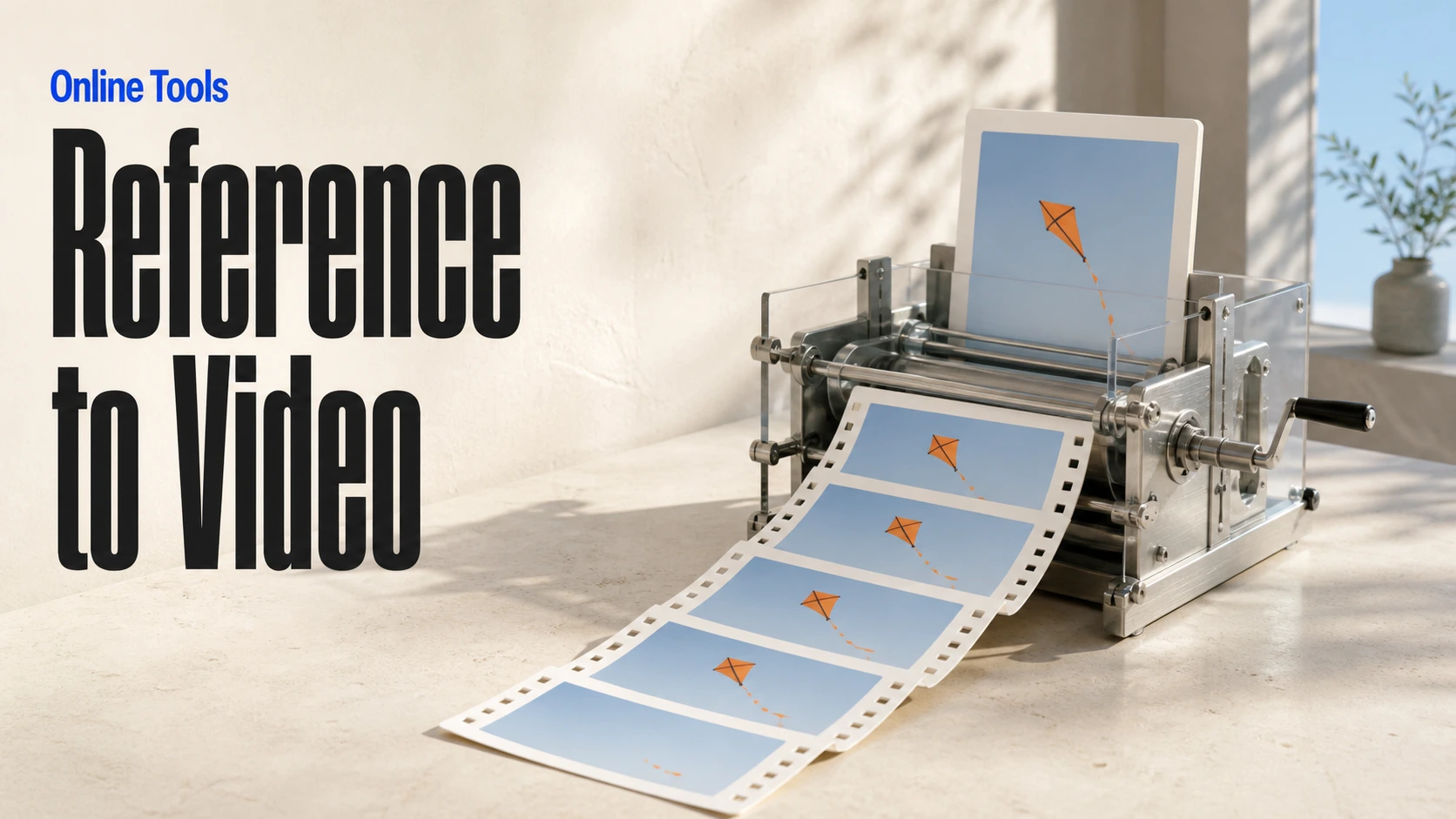
Konsistente Videos aus Referenzmedien erstellen

Erstelle visuelle KI-Bild- und Videoworkflows auf einer unendlichen Arbeitsfläche
// Step 1: Submit generation request
const response = await fetch('https://api.flaq.ai/api/v1/video/task', {
  method: 'POST',
  headers: {
    'Content-Type': 'application/json',
    'Authorization': 'Bearer YOUR_API_KEY'
  },
  body: JSON.stringify({
    model_name: 'seedance-v2.0-fast-reference-to-video',
    prompt: 'Use image one for the subject, follow the movement from video one, and use audio one for the atmosphere',
    resolution: '720p',
    duration: 8,
    aspect_ratio: '9:16',
    sound: true,
    images: ['https://example.com/subject-reference.jpg'],
    videos: ['https://example.com/motion-reference.mp4'],
    audios: ['https://example.com/atmosphere-reference.mp3']
  })
});

const { data } = await response.json();
const taskId = data.task_id;

// Use the @ (AT) reference feature in prompt through <<<...>>> placeholders.
// Placeholder numbering is 1-based for each media array:
// <<<image_1>>> = images[0], <<<image_2>>> = images[1]
// <<<video_1>>> = videos[0], <<<audio_1>>> = audios[0]
const mediaReferenceResponse = await fetch('https://api.flaq.ai/api/v1/video/task', {
  method: 'POST',
  headers: {
    'Content-Type': 'application/json',
    'Authorization': 'Bearer YOUR_API_KEY'
  },
  body: JSON.stringify({
    model_name: 'seedance-v2.0-fast-reference-to-video',
    prompt: 'Have the dancer from <<<image_1>>> perform the movement from <<<video_1>>> on the stage in <<<image_2>>>, using the rhythm from <<<audio_1>>>',
    resolution: '720p',
    duration: 10,
    aspect_ratio: '9:16',
    sound: true,
    images: [
      'https://example.com/dancer-reference.jpg',
      'https://example.com/stage-reference.jpg'
    ],
    videos: ['https://example.com/dance-movement-reference.mp4'],
    audios: ['https://example.com/rhythm-reference.mp3']
  })
});

const { data: mediaReferenceData } = await mediaReferenceResponse.json();
const mediaReferenceTaskId = mediaReferenceData.task_id;
// Step 2: Poll for results
const taskId = data.task_id;

const pollResult = async (taskId) => {
  const res = await fetch(`https://api.flaq.ai/api/v1/video/${taskId}`, {
    headers: { 'Authorization': 'Bearer YOUR_API_KEY' }
  });
  return res.json();
};

while (true) {
  const pollResultData = await pollResult(taskId);
  const status = pollResultData.data.task_status;

  if (status === 'succeed') {
    console.log(pollResultData.data.task_result.videos[].);
    ;
  }

   (status === ) {
    .(pollResultData..);
    ;
  }

    ( (resolve, ));
}
# Step 1: Submit generation request
import requests

response = requests.post(
    'https://api.flaq.ai/api/v1/video/task',
    headers={
        'Content-Type': 'application/json',
        'Authorization': 'Bearer YOUR_API_KEY'
    },
    json={
        'model_name': ,
        : ,
        : ,
        : ,
        : ,
        : ,
        : [],
        : [],
        : []
    }
)

result = response.json()
task_id = result[][]


media_reference_response = requests.post(
    ,
    headers={
        : ,
        :
    },
    json={
        : ,
        : ,
        : ,
        : ,
        : ,
        : ,
        : [
            ,

        ],
        : [],
        : []
    }
)

media_reference_result = media_reference_response.json()
media_reference_task_id = media_reference_result[][]
# Step 1: Submit generation request
curl -X POST https://api.flaq.ai/api/v1/video/task \
  -H "Content-Type: application/json" \
  -H "Authorization: Bearer YOUR_API_KEY" \
  -d '{
    "model_name": "seedance-v2.0-fast-reference-to-video",
    "prompt": "Use image one for the subject, follow the movement from video one, and use audio one for the atmosphere",
    "resolution": "720p",
    "duration": 8,
    "aspect_ratio": "9:16",
    "sound": true,
    "images": ["https://example.com/subject-reference.jpg"],
    "videos": ["https://example.com/motion-reference.mp4"],
    "audios": ["https://example.com/atmosphere-reference.mp3"]
  }'

# Use the @ (AT) reference feature in prompt through <<<...>>> placeholders.
# Placeholder numbering is 1-based for each media array:


curl -X POST https://api.flaq.ai/api/v1/video/task \
  -H  \
  -H  \
  -d
# Step 2: Poll for results
task_id = response.json()['data']['task_id']
poll_url = f"https://api.flaq.ai/api/v1/video/{task_id}"

while True:
    poll_result = requests.get(poll_url, headers={'Authorization': 'Bearer YOUR_API_KEY'}).json()
    status = poll_result['data']['task_status']
    if status == 'succeed':
        print(poll_result['data']['task_result']['videos'][0]['url'])
        break
    if status == 'failed':
        print(poll_result['data']['task_status_msg'])
        break
    time.sleep(10)
# Step 2: Poll for results
# Replace {task_id} with the task_id returned from the submit response
curl -X GET "https://api.flaq.ai/api/v1/video/{task_id}" \
  -H "Authorization: Bearer YOUR_API_KEY"